
The Evolution of Nuclear Power for Space
For more than half a century, engineers have been trying to solve one deceptively simple problem: how do you generate reliable electricity when there is no power grid, no atmosphere, no easy way to perform repairs, and sometimes not even enough sunlight?
Solar panels have become the workhorse of modern spacecraft. They are relatively light, dependable and increasingly efficient. But solar power has a fundamental limitation: it depends on sunlight.
That limitation becomes critical as spacecraft travel farther from the Sun, operate in deep shadow, or attempt to establish a permanent presence on another world. A lunar base, for example, could face long periods without direct sunlight. A spacecraft travelling to the outer Solar System receives only a tiny fraction of the sunlight available near Earth.
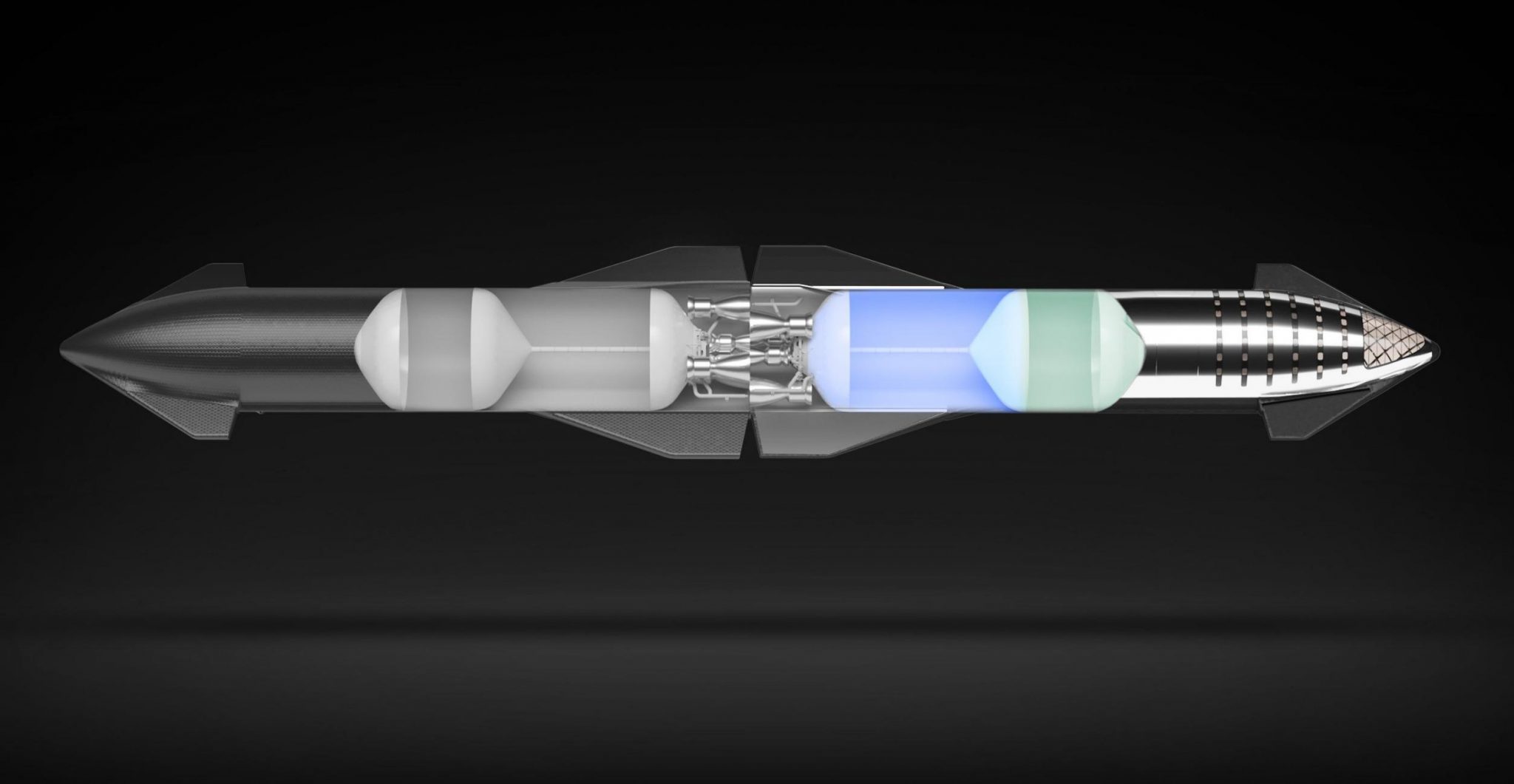
A nuclear reactor can generate electricity day and night, in darkness as well as sunlight, and without depending on the distance from the Sun. This makes nuclear energy one of the most promising technologies for future deep-space exploration and extraterrestrial settlements.
But the path from the first experimental space reactor to today’s concepts for lunar nuclear power plants has been long and complicated.
It is a story of engineering ambition, technological setbacks, unexpected breakthroughs — and a gradual shift from proving that nuclear reactors could work in space to asking whether they could become the backbone of a permanent off-Earth infrastructure.
Why Put a Nuclear Reactor in Space?
At its most basic level, a space nuclear reactor works on the same physical principle as a reactor on Earth.
Inside the reactor core, a controlled nuclear fission reaction releases heat. That heat must then be converted into a useful form of energy, usually electricity.
On Earth, the most familiar approach is to use the heat to produce steam, which drives turbines connected to electrical generators. Such systems can produce enormous amounts of power, but they are far too large and complex for most spacecraft.
Space reactors therefore require a different engineering philosophy.
Every kilogram matters. Every moving part is a potential point of failure. Pumps, turbines, pipes and other components must survive launch vibrations, extreme temperatures and years of operation without maintenance.
There is another problem that does not exist in quite the same way on Earth: waste heat.
On Earth, a power station can release heat into the atmosphere, a river, a cooling tower or the ocean. A spacecraft has none of these options.
In the vacuum of space, heat can only be rejected efficiently through radiation. Large radiator panels therefore become an essential part of a space nuclear power system.
This creates a fundamental design challenge: the reactor must produce enough power to justify its mass, while the entire system must remain compact enough to launch.
That balance has shaped almost every generation of space-reactor technology.
SNAP-10A: The First Nuclear Reactor in Space
The first major milestone came from the United States during the early years of the Space Age.
In the 1950s, the United States launched the SNAP programme — Systems for Nuclear Auxiliary Power — to investigate compact nuclear power sources for spacecraft. The programme included both radioisotope power systems and actual nuclear reactors.
The most ambitious of these early efforts was SNAP-10A.
On 3 April 1965, a spacecraft carrying SNAP-10A was launched into orbit. It became the first known nuclear reactor to operate in space.
SNAP-10A was tiny by the standards of terrestrial nuclear engineering. Its electrical output was approximately 500 watts.
That may sound insignificant today, but 500 watts represented a remarkable achievement in the mid-1960s. The reactor demonstrated that a controlled fission system could be launched on a rocket, started remotely and operated in the hostile environment of space.
The design used uranium-zirconium hydride fuel, a liquid-metal coolant and thermoelectric power conversion.
SNAP-10A operated successfully for 43 days.
Its mission ended not because the reactor core failed, but because an electrical component in the spacecraft’s control system malfunctioned. The reactor itself had demonstrated that the basic concept worked.
The experiment was short-lived, but its historical importance was enormous.
For the first time, humanity had operated a nuclear fission reactor beyond Earth’s atmosphere.
SNAP-10A also revealed a lesson that would remain important for decades: in space, the reactor itself may not be the weakest part of the system. Supporting electronics, cooling systems, power-conversion equipment and communications can all determine the success or failure of the mission.
The reactor remains in orbit today.
The Soviet Union Takes a Different Path
While the United States was experimenting with compact nuclear power, the Soviet Union was pursuing a more operational approach.
The Soviet military had a particularly demanding requirement: ocean surveillance satellites equipped with powerful radar systems.
These spacecraft needed large amounts of electrical power. Conventional solar arrays presented limitations in terms of power generation, spacecraft orientation and mission design.
Nuclear reactors offered an alternative.
During the 1970s and 1980s, Soviet RORSAT reconnaissance satellites were equipped with BUK nuclear reactor systems. Unlike SNAP-10A, these reactors were not simply technology demonstrations. They were intended to support operational missions.
Around 31 satellites of this general class were launched with nuclear reactors.
The programme demonstrated one of the strongest advantages of nuclear power: a reactor could provide continuous electrical power regardless of whether the spacecraft was in sunlight or darkness.
But it also exposed one of the most difficult problems associated with space nuclear power — what happens when the mission ends?
A terrestrial nuclear reactor can eventually be shut down, dismantled and transported to a controlled facility.
A reactor in orbit presents a completely different problem.
The spacecraft cannot simply be parked in a warehouse.
If it remains in a low orbit, atmospheric drag may eventually bring it back towards Earth. If radioactive material survives re-entry, the consequences can be serious.
This concern became painfully real with the Soviet satellite Kosmos-954, which re-entered the atmosphere in 1978 and scattered radioactive material across parts of northern Canada.
Another reactor-powered satellite, Kosmos-1402, also experienced an uncontrolled re-entry in 1983.
These incidents became important lessons in the development of international practices and engineering approaches for the safe operation and disposal of nuclear-powered spacecraft.
From BUK to TOPAZ
The Soviet programme did not stop with the BUK reactors.
Engineers developed the more advanced TOPAZ reactor system, which used thermionic energy conversion.
Thermionic converters generate electricity directly from heat by exploiting the movement of electrons at high temperatures. This offered the potential for a compact power-conversion system without conventional turbines.
Two TOPAZ-powered spacecraft, Kosmos-1818 and Kosmos-1867, were launched in 1987.
The technology demonstrated another important direction in the evolution of space reactors: increasing power output without simply making the reactor dramatically larger.
The challenge was becoming increasingly clear.
Space nuclear engineering was no longer just about making a reactor work.
It was about making it small enough, light enough, efficient enough and reliable enough to be worth launching into orbit.
The Mass Problem
The biggest obstacle to space nuclear power is surprisingly simple: mass.
A reactor requires more than a reactor core.
There may also be a coolant system, pumps, heat exchangers, power-conversion equipment, control systems, radiators and radiation shielding.
Every kilogram has a price because every kilogram must first be accelerated into space.
This produces a chain reaction of its own.
A more powerful reactor generates more heat.
More heat requires a larger thermal-management system.
Larger radiators increase mass.
More mass requires a larger launch vehicle or reduces the amount of useful equipment the spacecraft can carry.
The result is a fundamental engineering trade-off.
The objective is not simply to build the most powerful reactor.
It is to build the reactor that produces the most useful power for the least possible mass.
This concept of specific power has become one of the central measures of space nuclear technology.
SP-100: The Search for a Hundred Kilowatts
In the United States, one of the most ambitious attempts to address these challenges was the SP-100 programme.
The goal was to develop a space nuclear power system capable of producing roughly 100 kilowatts of electrical power.
To put that into perspective, SNAP-10A had produced only around 500 watts.
The difference was enormous.
Achieving such a leap required new reactor materials, higher operating temperatures, improved heat-transfer systems and more efficient power conversion.
But increasing temperature creates its own problems.
Higher temperatures can make energy conversion more efficient and potentially reduce the size of radiators. At the same time, structural materials must survive much more demanding thermal and radiation environments.
SP-100 never became an operational space power plant.
Yet the programme produced valuable research and helped shape later American thinking about nuclear-electric systems for spacecraft.
The technology was advancing, but another problem remained: what exactly would these increasingly powerful reactors be used for?
Nuclear Power Beyond Earth Orbit
As space exploration expanded, the role of nuclear power began to change.
The original question had been how to power a satellite.
The next question was much more ambitious:
How do you power a spacecraft operating millions or even billions of kilometres from the Sun?
The farther a spacecraft travels from the Sun, the less useful solar power becomes.
At Jupiter, for example, sunlight is dramatically weaker than it is at Earth.
A spacecraft carrying large scientific instruments may need substantial amounts of electricity for communications, computers, instruments, thermal control and propulsion.
This is where nuclear-electric power becomes particularly attractive.
One of the most ambitious examples was NASA’s proposed Jupiter Icy Moons Orbiter, or JIMO.
The spacecraft was intended to study the icy moons of Jupiter and would have relied on a nuclear reactor as its primary energy source.
The project was ultimately cancelled, but the concept represented a major change in thinking.
The reactor was no longer simply a backup power source.
It was becoming the central energy system of a deep-space spacecraft.
Kilopower: Making the Reactor Small Again
After decades of research into increasingly sophisticated and powerful systems, engineers returned to a surprisingly simple idea:
What if the future of space nuclear power was not a giant reactor, but a family of small ones?
This thinking led to the Kilopower programme.
The concept focused on compact fission reactors capable of producing roughly 1 to 10 kilowatts of electrical power.
Instead of relying on a conventional steam turbine, the system used Stirling engines to convert reactor heat into electricity.
In 2018, NASA and the U.S. Department of Energy conducted the KRUSTY experiment — the Kilopower Reactor Using Stirling Technology test.
The test was significant because it represented a full-scale demonstration of a fission-based space reactor concept after more than five decades of development since SNAP-10A.
Engineers tested startup, steady-state operation and changing power conditions.
The lesson was important.
The future of space nuclear power might not depend on building ever larger reactors.
It might depend on building simple, modular reactors that can be deployed wherever they are needed.
That idea is particularly important for lunar exploration.
The Moon Changes Everything
The Moon presents a unique energy challenge.
A lunar day lasts roughly two Earth weeks, followed by roughly two weeks of darkness at a given location. While some areas near the lunar poles receive unusually persistent sunlight, permanently shadowed regions can remain extremely cold and dark.
A lunar settlement therefore needs a reliable source of electricity that does not disappear when the Sun goes down.
Solar panels can provide power during illuminated periods, but long periods of darkness require substantial energy storage or alternative power sources.
A nuclear reactor does not have this limitation.
It can operate continuously.
For a future lunar base, that energy could support much more than lighting.
Electricity could be used to extract and process water, produce oxygen, operate scientific instruments, power communications equipment, charge electric vehicles, maintain habitats and support industrial processes.
This is why NASA and the U.S. Department of Energy have been developing concepts under the Fission Surface Power programme.
The objective is no longer simply to demonstrate that a reactor can operate in space.
The objective is to create a practical power station that could operate on the surface of another world.
NASA has investigated concepts in the roughly 10-kilowatt range and has also discussed larger systems, including concepts around 40 kilowatts, for future lunar missions.
That may sound modest compared with a terrestrial power station.
But in space, tens of kilowatts can be transformative.
A reliable 40-kilowatt power source operating continuously would provide hundreds of kilowatt-hours of energy every day without depending on sunlight.
Several such units operating together could form the electrical backbone of a growing lunar settlement.
What Will the Next Generation Look Like?
The evolution of space reactors points towards several clear trends.
Modularity
Future lunar or Martian settlements may use several smaller reactors rather than one enormous power plant.
This provides an important advantage: redundancy.
If one reactor stops working, the entire settlement does not necessarily lose power.
Additional modules could also be added as the settlement grows.
Higher Specific Power
Engineers will continue to search for ways to generate more electricity without increasing mass.
This means improving reactor design, power conversion, thermal management and materials.
The ideal system will deliver maximum electrical output while requiring the minimum possible mass.
Fewer Moving Parts
Reliability becomes particularly important when a reactor is operating millions of kilometres from Earth.
A failed component may be impossible to replace.
This encourages engineers to minimise mechanical complexity and develop systems capable of operating autonomously for years.
Advanced Materials
High-temperature operation is one of the keys to improving efficiency.
But high temperatures place enormous demands on materials.
Future reactors will require structural materials capable of surviving high temperatures, radiation and long-term thermal cycling.
Autonomous Operation
A reactor on the Moon or Mars cannot depend on continuous human supervision from Earth.
Communication delays alone make real-time control impossible on Mars.
Future systems will therefore need sophisticated autonomous control, fault detection and protective shutdown mechanisms.
Safe Disposal
The beginning and middle of a reactor’s life are only part of the engineering problem.
Its end-of-mission behaviour is equally important.
Future systems must be designed so that shutdown, isolation and eventual disposal can be performed safely, whether the reactor remains on the surface of another world or is placed into a controlled disposal trajectory.
A Nuclear Reactor Is Not a Nuclear Rocket
There is another distinction that is important when discussing nuclear technology in space.
A nuclear reactor can be used to generate electricity, but it can also be used to generate propulsion.
These are very different applications.
A nuclear-electric system converts reactor heat into electrical power.
A nuclear thermal rocket, by contrast, uses the reactor’s heat directly.
In a nuclear thermal engine, a propellant such as hydrogen is heated to extremely high temperatures by passing it through or around the reactor core. The hot gas then expands through a nozzle to generate thrust.
The United States investigated this technology extensively during the Rover and NERVA programmes in the 1960s and 1970s.
Numerous ground tests demonstrated that nuclear thermal propulsion was technically feasible, but the technology never reached operational flight status.
Today, interest in nuclear thermal propulsion has returned because it could potentially shorten travel times for crewed missions to Mars and other destinations.
The same basic technology — controlled nuclear fission — could therefore support two very different aspects of future exploration:
powering the spacecraft and moving the spacecraft.
From Space Experiment to Extraterrestrial Infrastructure
The history of nuclear reactors in space can be viewed as a series of increasingly ambitious questions.
SNAP-10A asked:
Can a nuclear reactor actually operate in space?
The Soviet BUK systems demonstrated:
Can nuclear reactors provide practical power for operational spacecraft?
TOPAZ explored:
Can energy conversion become more compact and efficient?
SP-100 asked:
Can space reactors deliver dramatically more electrical power?
JIMO explored:
Can nuclear power support complex missions in the outer Solar System?
Kilopower returned to another question:
Can a nuclear reactor be made small, simple and modular enough for practical deployment?
And today’s lunar fission-power programmes are asking perhaps the most important question of all:
Can nuclear power become part of a permanent human presence beyond Earth?
That is a fundamental change in perspective.
The first generation of space reactors was designed to prove a concept.
The next generations were designed to improve power and efficiency.
The emerging generation is being designed as infrastructure.
That distinction matters.
A spacecraft can survive with a limited amount of electricity.
A settlement cannot.
A permanent lunar or Martian base will require continuous power for heating, communications, life support, transportation, manufacturing, science and resource extraction.
Energy is therefore not simply another subsystem.
It is the foundation on which everything else depends.
The Beginning of a New Space Energy Era
The first nuclear reactor to operate in space produced only about 500 watts.
Modern concepts are already looking toward systems capable of producing tens of kilowatts, with the possibility of combining multiple units into larger power networks.
The technology has therefore evolved from an experimental curiosity into a potential foundation for extraterrestrial infrastructure.
Yet the most important achievement may not be a particular reactor design.
It may be the gradual development of an entirely new engineering philosophy.
Space reactors must be compact, autonomous, fault-tolerant, radiation-resistant and capable of operating for years without maintenance. They must survive launch, function in extreme environments and eventually shut down safely.
The challenge is enormous.
But the potential reward is equally significant.
If humanity establishes a permanent presence on the Moon or eventually sends crews to Mars, the most important piece of equipment may not be the rocket that gets them there.
It may be the power plant that keeps them alive after they arrive.
Solar power will undoubtedly remain an essential part of future space exploration. But nuclear power offers something solar energy cannot easily provide: continuous, predictable energy independent of sunlight.
That makes the evolution of space nuclear reactors more than a story about experimental spacecraft.
It may be the beginning of the energy infrastructure of a civilisation expanding beyond Earth.
And the question that began with SNAP-10A in 1965 has now become much more ambitious.
Not simply:
Can we generate nuclear power in space?
But:
How powerful, compact, autonomous and reliable can a nuclear power plant become when its next home is another world?
